Meeting Point
Tibet Guest House Pvt.Ltd, Thamel Kathmandu Nepal +977-1-5360556, 5360383
Departure & Return Location
Tribhuwan International Airport – Kathmandu
Departure Time
3 Hours Before Flight Time
-
Bus, Airlines
-
3 Stars Hotels
-
7,129 M
-
Kathmandu
-
Autum & Spring
-
All meals during the trek
-
1-15
Overview
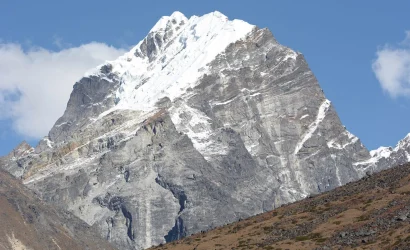
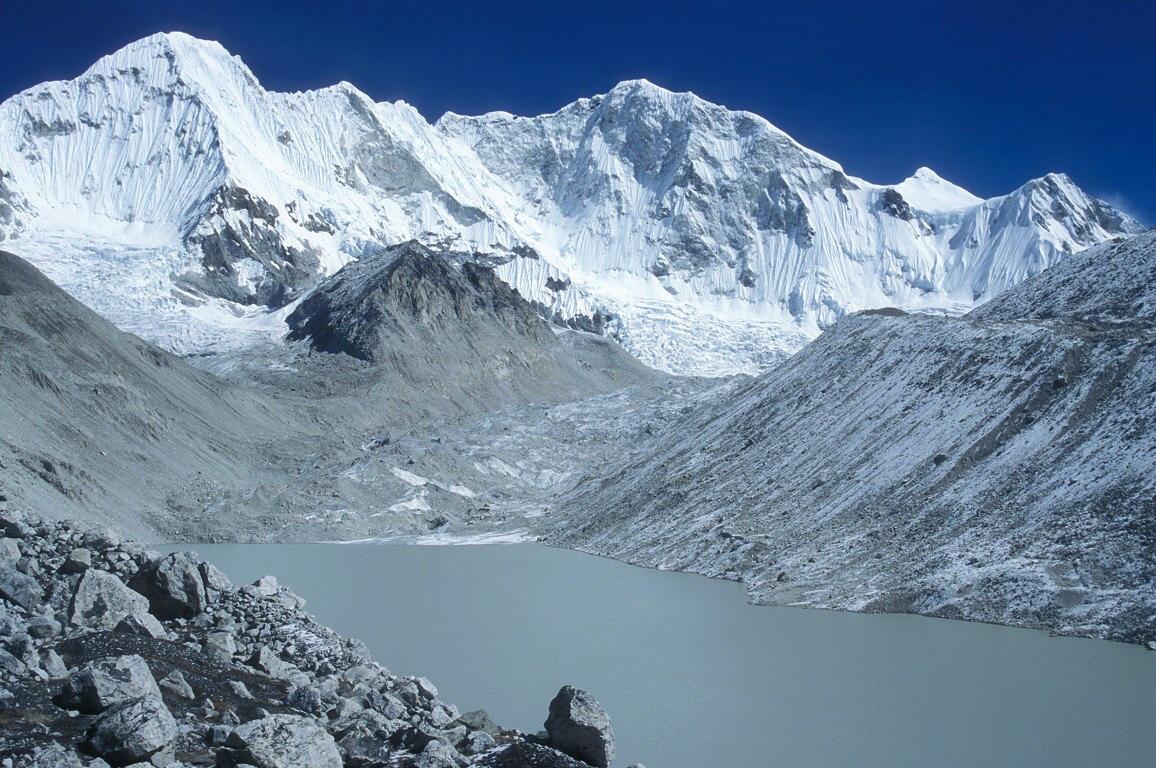
Mount Baruntse (7,129 meters / 23,389 feet) is a stunning, symmetrical snow peak located in the remote Hinku Valley of Nepal’s Khumbu region, within the Makalu-Barun National Park. It’s bounded by the Hunku Glacier to the south, Barun Glacier to the east, Cho Glacier to the north, and Imja Glacier to the northwest. First summited in 1954 by a New Zealand expedition via the southeast ridge, Baruntse offers breathtaking panoramic views of five 8,000m giants: Everest, Lhotse, Makalu, Kanchenjunga, and Cho Oyu. This expedition is ideal for mountaineers with prior high-altitude experience (e.g., 6,000m+ climbs like Island Peak or Mera Peak), serving as excellent preparation for 8,000m peaks. It’s less crowded than Everest routes but demands respect for its steep ice slopes (up to 50 degrees), crevasses, and unpredictable weather.
The climb is semi-technical, primarily along the accessible South Ridge (preferred over the more challenging southeast ridge), involving fixed ropes, crampons, ice axes, and glacier travel. Success rates are high (around 80-100% with experienced teams), especially in autumn. The expedition combines trekking through pristine Sherpa villages and rhododendron forests with mountaineering, often including an optional Mera Peak (6,476m) ascent for acclimatization.
Difficulty and Requirements
- Difficulty Level: Moderate to challenging for 7,000m peaks. It’s technically less demanding than peaks like Ama Dablam but requires strong fitness, crampon/ice axe proficiency, and prior alpine experience. The West Col (Ice Col) ascent and summit ridge can be exposed, with risks of avalanches and high winds.
- Fitness: Excellent cardiovascular endurance; able to hike 6-8 hours daily with a pack and handle 7,000m+ altitudes.
- Experience: Minimum 4,000-6,000m climbs recommended. No extreme rock climbing, but glacier skills essential.
- Group Size: Typically 4-12 climbers per expedition; private trips available.
- Best Time: Spring (April-May) for stable snow; Autumn (September-October) for clearer skies and higher success rates. Avoid monsoon (June-August) due to heavy rains.
Permits and Fees
Required permits (handled by operators):
- Baruntse Climbing Permit/Royalty: $500 (spring), $250 (autumn), $125 (summer/winter).
- Makalu-Barun National Park: ~USD 30/person.
- Sagarmatha National Park (for Khumbu access): ~USD 20/person.
- Pasang Lhamu Rural Municipality Fee: Variable, ~USD 10-20.
- Nepal Tourist Visa: USD 125 for 90 days (on arrival).
Preparation Tips
- Gear: Double boots, sleeping bag (-20°C), harness, carabiners, personal ice gear. Rent in Kathmandu (~USD 200).
- Health: Vaccinations (hepatitis, typhoid); AMS prevention via Diamox. Hydrate heavily.
- Sustainability: Follow Leave No Trace; support local Sherpa economy.
- Why Go?: A “training ground” for Everest with fewer crowds—rewarding for the views alone.
Expedition Highlights
- Stunning Panoramic Views: From the summit of Mount Baruntse (7,129m), witness a breathtaking 360° panorama featuring five 8,000m peaks—Everest, Lhotse, Makalu, Kanchenjunga, and Cho Oyu—set against the pristine Hinku Valley and glacier landscapes.
- Semi-Technical Climb: The South Ridge route offers a moderately challenging ascent with fixed ropes, glacier travel, and steep ice slopes (up to 50°), ideal for climbers with 6,000m+ experience preparing for 8,000m peaks like Everest.
- Remote Wilderness Trek: Journey through the untouched Hinku Valley, passing Sherpa villages, rhododendron forests, and glacial lakes like Seto Pokhari, with minimal crowds compared to Everest Base Camp routes.
- Optional Mera Peak Acclimatization: Climb Mera Peak (6,476m) mid-expedition for optimal altitude acclimatization, boosting summit success (80-100% in good conditions) while enjoying additional high-altitude views.
- Cultural Immersion: Engage with Sherpa culture through teahouse stays, a traditional puja ceremony at Base Camp, and interactions in remote villages, enriched by local cuisine like dal bhat and yak stew.