Meeting Point
Tibet Guest House Pvt.Ltd, Thamel Kathmandu Nepal +977-1-5360556, 5360383
Departure & Return Location
Tribhuwan International Airport – Kathmandu
Departure Time
3 Hours Before Flight Time
-
Bus, Airlines
-
3 Stars Hotels
-
7,126 M
-
Kathmandu
-
Autum & Spring
-
All meals during the trek
-
1-15
Overview
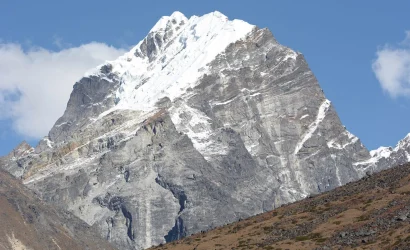
The Himlung Expedition targets Mt. Himlung Himal (7,126m / 23,379 ft), a prominent 7,000m peak in Nepal’s remote Manaslu-Annapurna region, near the Tibet border. Classified as a “moderate” (PD+ to AD on the Alpine scale) climb, it’s ideal for mountaineers with prior high-altitude experience (e.g., 6,000m peaks) seeking a stepping stone to 8,000m summits like Everest. The route combines cultural trekking through restricted Nar and Phu valleys with technical glacier travel, ice walls, and high camps.
Key Expedition Details
- Location: Northeastern Manaslu region, within the Nar-Phu restricted area (special permits required: Annapurna Conservation Area Permit, Nar-Phu Restricted Permit, and NMA climbing permit).
- Duration: Typically 28–35 days, including Kathmandu prep, drive/trek to base camp (7–10 days), climbing period (15–20 days), and return.
- Standard Itinerary Outline:
- Days 1–2: Arrival in Kathmandu; gear checks and permits.
- Days 3–10: Drive to Koto (via Besisahar), then trek via Meta, Kyang, Phu Gaon (acclimatization), and Nar villages to Base Camp (4,850–4,900m). This off-the-beaten-path route through glacial valleys offers solitude and Tibetan-influenced culture.
- Climbing Phase: Base Camp + 3 high camps (C1: 5,450m; C2: 6,000m; C3: 6,350m). Involves moraine/rock to C2 (trekking boots), then crampons/ropes for icy slopes and ridges. Summit push from C3; descent same day if possible.
- Return: Reverse trek to Koto, drive to Kathmandu.
- Camps & Support: Full Sherpa support (1:1 ratio common), oxygen (optional), fixed ropes on technical sections. Base Camp on grassy meadows above Phu.
Best Time to Climb
Spring (April–May) and autumn (September–November) offer stable weather, clear skies, and moderate temperatures.
- Autumn (esp. October): Most popular; post-monsoon clarity, less snow, higher success rates, festive Nepali atmosphere (Dashain/Tihar).
- Spring (late April–May): Blooming rhododendrons, fewer crowds, but heavier snow from winter carryover—better for experienced climbers. Avoid monsoon (June–August: heavy rain/avalanches) and winter (December–March: extreme cold/winds).
Challenges & Preparation
- Difficulty: Moderate but demanding—steep ice (40–50° slopes), crevasse risks, altitude sickness. Requires crampons, ice axe, ropes; prior 6,000m+ experience essential.
- Fitness: Excellent cardio, strength training (6–12 months prep); mental resilience for 2–3 week climbing window.
- Risks: Remote (no quick rescue); weather windows critical. Acclimatize properly; self-sufficiency needed.
Highlights
- Views: Panoramas of Annapurna II/IV, Manaslu, Gangapurna, Pisang Peak, Lamjung Himal, and distant Tibetan peaks like Nandadevi or Api Himal.
- Cultural Immersion: Nar and Phu villages—ancient monasteries, stone houses, Tibetan Buddhist traditions, warm hospitality. Restricted access preserves authenticity; opened to tourists in 1992/2001.
- Adventure: Solitary trails, glacier crossings, high-altitude acclimatization. High success rate among 7,000m peaks.
- Expert Support: Guides often Everest summiteers; Sherpa teams handle logistics.